Integrating Vedic wisdom & yogic intelligence for Holistic wellness
Reclaiming the Soul of Yoga : Need to avoid Distortions
The ultimate purpose of Yoga within the IKS is single-pointed: Moksha—absolute spiritual liberation from the psychological conditioning, karmic loops, and existential suffering of human life. It was never designed as a health management protocol; it was designed as a mechanism for ultimate transcendence.
BASIC FUNDAMENTALS OF YOGA & HEALTH
Dr Sanjay Sharma, Professor of Surgery & Consultant Urologist, Vedic Astrologer, Yoga Instructor & Ayurveda Wellness Consultant
6/15/20268 min read
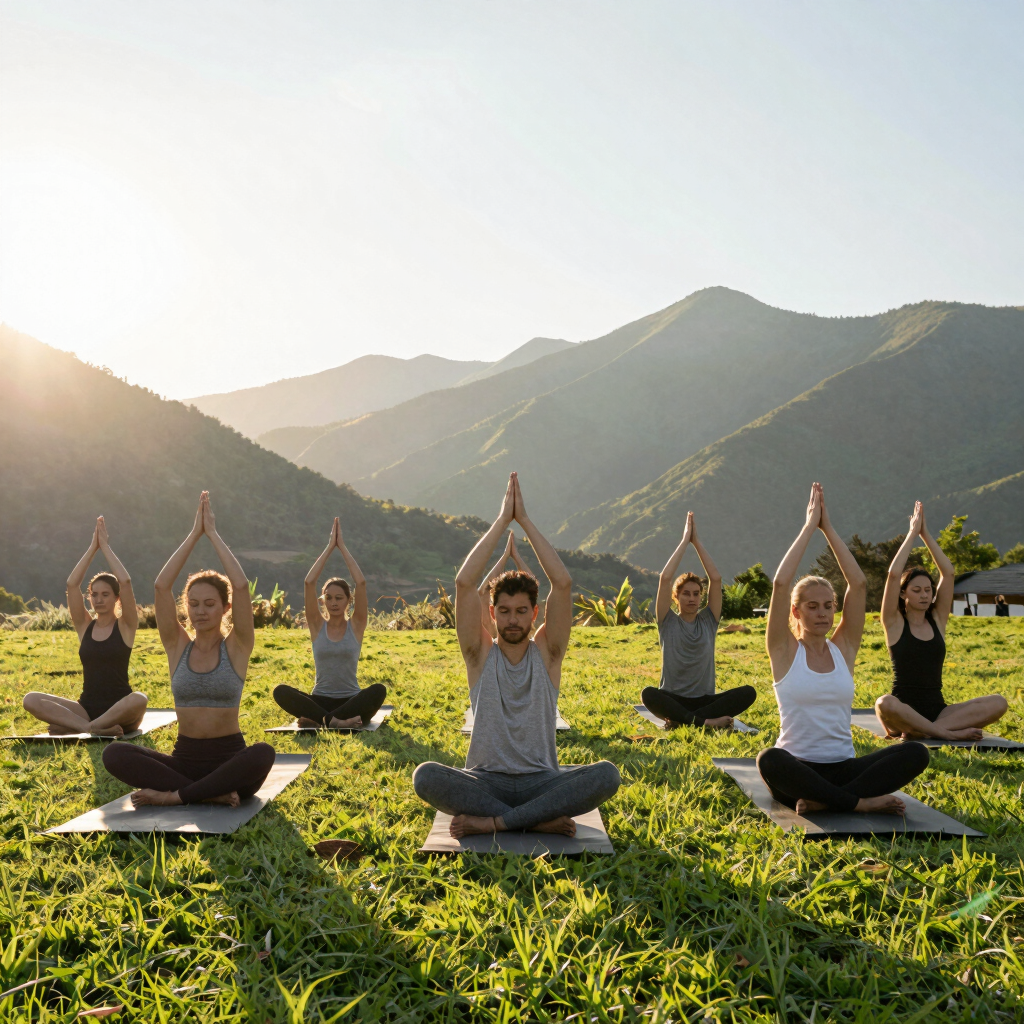
Reclaiming the Soul of Yoga : Need to avoid Distortions
We live in an era of unprecedented global "yoga" awareness. From the glass-fronted studios of New York and London to the corporate boardrooms of New Delhi, yoga has been embraced as a premier lifestyle trend. It is a multi-billion-dollar wellness industry, an aesthetic of flexibility, and a certified method for physical fitness and stress reduction.
Yet, as we look at this global phenomenon in 2026, a profound question challenges the modern seeker: In our rush to popularize the body of Yoga, have we accidentally suffocated its soul?
To answer this, we must step outside the contemporary fitness bubble and journey back into the structural depths of the Indian Knowledge System (IKS). We must peel back the layers of commercialization to understand what Yoga actually is, how it became distorted, and how we can consciously return to its true, evolutionary spirit.
1. What is Yoga? (The Core Paradigm)
To the modern mind, yoga is a verb—an action you do on a rubber mat for sixty minutes. But in the ancient mapping of human consciousness, Yoga is not an activity; it is a definitive state of being.
The word Yoga originates from the Sanskrit root Yuj, which means to yoke, join, bind, or unite. At its most fundamental level, Yoga is the experiential science of uniting the individual consciousness (Jivatma) with the universal consciousness (Paramatma). It is the systematic dissolution of the illusion of separation.
When the mind stops fabricating a boundary between "me" and "the rest of the universe," the friction of human existence ceases. That state of absolute, unshakeable harmony is Yoga.
2. The Meaning and Purpose of Yoga in the Indian Knowledge System
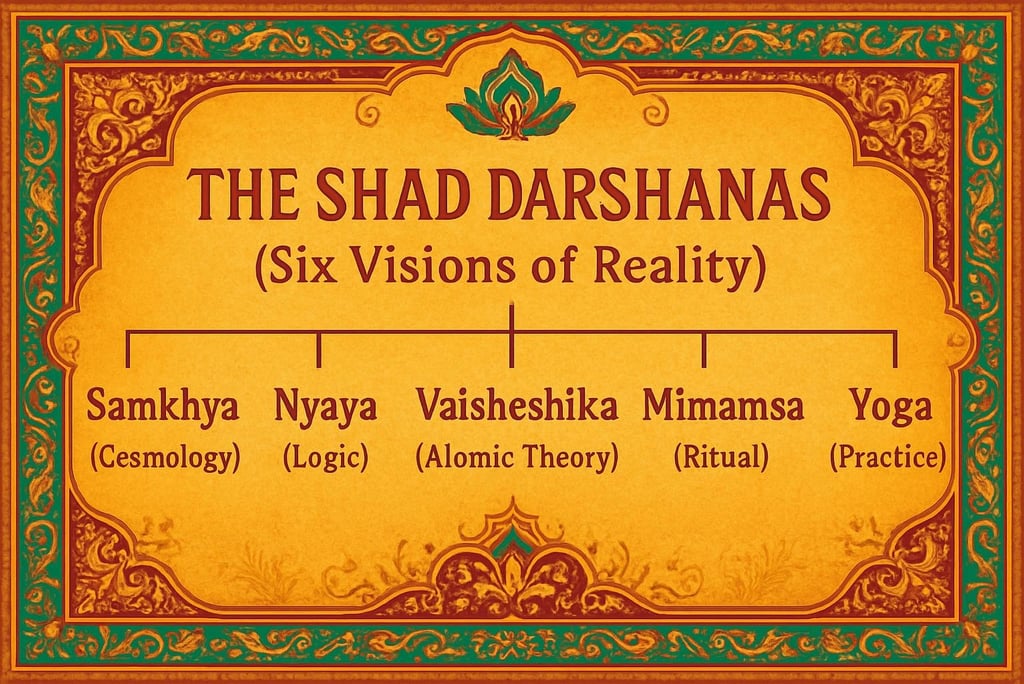
Within the architecture of the Indian Knowledge System, Yoga is classified as one of the Shad Darshanas—the six orthodox schools of classical Indian philosophy. It is important to realize that Darshana does not translate to a mere abstract theory or philosophy; it literally means "a vision" or "a direct way of seeing reality."
While other systems like Samkhya lay out the brilliant theoretical cosmology of how the universe and the human psyche are structured, Yoga is the practical laboratory. It is the experiential methodology that allows an individual to test those metaphysical truths within their own biology and consciousness.
The ultimate purpose of Yoga within the IKS is single-pointed: Moksha—absolute spiritual liberation from the psychological conditioning, karmic loops, and existential suffering of human life. It was never designed as a health management protocol; it was designed as a mechanism for ultimate transcendence.
3. The Original Philosophy: The Chitta and the Mirror
The foundational textbook of classical Yoga is Sage Patanjali’s Yoga Sutras, compiled over two millennia ago. In the very second verse of this sacred text, Patanjali delivers the absolute, definitive definition of the science:
'Yogash Chitta Vritti Nirodhah'
योगश्चित्तवृत्तिनिरोधः
"Yoga is the intentional stillness and cessation (Nirodha) of the modifications, ripples, and fluctuations (Vrittis) of the mind-stuff (Chitta)."
Patanjali offers a beautiful, clear analogy: consider your deepest self (Purusha) to be like the sky, and your mind (Chitta) to be a lake. When the wind of desire, anxiety, or external sensory input blows across the lake, it creates aggressive ripples (Vrittis). The water becomes turbid, and you can no longer see the bottom. You mistake the chaotic ripples for who you are.
Yoga is the profound technology used to quiet the wind and still the water. When the lake of the mind becomes perfectly calm and transparent, the ripples vanish, and the light of the True Self is reflected with absolute clarity.
To achieve this, Patanjali did not prescribe a complex gymnastics routine. He mapped out Ashtanga Yoga—an integrated, eight-limbed pathway where physical postures occupy just one small, initial fraction of the journey:
1. YAMA (Universal Social Ethics)
2. NIYAMA (Personal Internal Disciplines)
3. ASANA (Stable, Comfortable Physical Posture)
4. PRANAYAMA (Regulation of Primal Vital Energy)
5. PRATYAHARA (Internalization of the Senses)
6. DHARANA (Single-Pointed Concentration)
7. DHYANA (Uninterrupted Meditative Absorption)
8. SAMADHI (Absolute Spiritual Union/Oneness)
4. The Shift: How "Yoga" Became Synonymous with Asanas
If classical Yoga is an expansive, eight-layered journey of consciousness, how did the modern world manage to compress it almost entirely into Limb Number Three (Asana)?
To understand this historical pivot, we must look at the evolution of the practice over the last thousand years. In Patanjali’s original Sutras, the word Asana is given very little real estate. He defines it simply as Sthira Sukham Asanam—a posture that is unshakeable (Sthira) and filled with comfort (Sukham). The sole purpose of an Asana was simply to condition the physical body so that an individual could sit still for hours in meditation without physical pain or distraction.
However, around the 10th to 11th century CE, the Hatha Yoga movement emerged through sages like Matsyendranath and Gorakshanath. They recognized that as humanity moved deeper into a denser, high-stress age, the human mind had become far too erratic to be stilled by pure meditation alone.
Their brilliant insight was somatic: they realized that to change the mind, you must first change the physical vessel. They expanded the repertoire of physical postures (Asanas), purification processes (Shatkarmas), and energetic seals (Mudras) to cleanse the biological tissues (Dhatus), open the energetic pathways (Nadis), and prepare the nervous system for higher states of awareness.
In the late 19th and early 20th centuries, as India sought to reclaim its cultural identity and interface with the West, pioneering teachers synthesized these Hatha Yoga techniques with Western gymnastics, physical culture, and anatomy. This hybrid form was highly visual, dynamic, and easily demonstrable, making it the perfect export to a Western world searching for physical wellness. Over decades of commercial acceleration, the deeper meditative ends of the spectrum were gradually sheared away, leaving behind the purely physical "vinyasa flows" and fitness routines we see popular today.
5. The Definitive Timeline of Hatha Yoga: Sages, Sastras, and Modern Pioneers
Siddha Matsyendranath & Sage Gorakshanath
10th – 11th Century CE
The legendary founders of the Natha Sampradaya lineage. Recognizing that a dense, high-stress age required a somatic approach to the mind, they authored early foundational texts like the Kaula Jnana Nirnaya and Goraksha Shataka, shifting the focus onto cleansing the physical body and activating internal energy channels (Nadis).
The Amritasiddhi Text
13th Century CE
The earliest known codified text to introduce the foundational mechanisms of Hatha Yoga. It explicitly mapped out the concepts of Bindu (vital energy), Nadi (subtle channels), and Prana, introducing the earliest Mudras (physical seals) used to lock and redirect spiritual energy within the physical frame.
Yogi Swatmarama — Hatha Yoga Pradipika
15th Century CE
The most definitive, universally studied scripture of Hatha Yoga. Swatmarama compiled previous oral traditions into a clear, four-stage manual covering the Chaturanga (Four Limbs): Asanas (postures), Shatkarmas & Pranayama (purifications and breath control), Mudras & Bandhas (energetic locks), and Nadanusandhana (meditation on the inner divine sound).
Sage Gheranda — Gheranda Samhita
17th Century CE
A monumental text taught in the form of a dialogue, introducing the Saptanga (Seven-Limbed) Yoga path. This manual treated the physical body like a clay pot that must be thoroughly baked and purified in the fire of discipline, detailing an unprecedented 21 purificatory blocks (Shatkarmas) and 32 distinct Asanas.
The Siva Samhita
Late 17th / Early 18th Century CE
An advanced, highly philosophical Hatha text spoken from the perspective of Lord Siva. It beautifully bridged the physical practices of Hatha Yoga with the non-dual metaphysics of Advaita Vedanta, detailing how bodily control leads directly to ultimate cosmic liberation.
Tirumalai Krishnamacharya
1888 – 1989
The modern link who rescued these medieval Hatha texts from obscurity. In his Mysore palace laboratory, he systematically blended the teachings of the Hatha Yoga Pradipika with clinical anatomy, creating the dynamic structural flow (Vinyasa) that serves as the root blueprint for nearly all contemporary physical yoga styles.
B.K.S. Iyengar
1918 – 2014
Author of Light on Yoga, he took the intense physical disciplines of the medieval Hatha texts and transformed them into an accessible, universally applicable therapeutic medical science through precise structural alignment and anatomical props.
Sri K. Pattabhi Jois
1915 – 2009
A premier student of Krishnamacharya, he formalized the rigorous, athletic sequencing of the Hatha tradition into the Ashtanga Vinyasa template, which became the direct precursor to modern Western "Power" and "Flow" yoga classes.
The Essential Insight: The Hidden Goal of Hatha
It is critical for the modern seeker to note that every single one of these original scriptures and sages explicitly states that Hatha Yoga is a preparatory staircase. Its sole purpose was to purify the biology and condition the nervous system so that the practitioner could successfully sit still and transition into Raja Yoga (the highest stages of silent, heart-centered meditative absorption).
6. The Present Crossroads: Are We Moving in the Right Direction?
There is no doubt that the massive global awareness surrounding yoga has brought immense benefits. Millions of individuals have found relief from chronic pain, managed their mental anxiety, and improved their physical vitality through Asana and Pranayama. To deny this would be a disservice to the practice.
However, if we evaluate our trajectory candidly, we are facing a structural crisis. We have traded depth for reach.
By isolating Asana from its ethical and spiritual container, modern yoga has frequently been reduced to a sophisticated form of vanity. We see gym sessions focused entirely on physical aesthetics, hyper-flexibility, and performance. Ironically, a science designed to systematically dissolve the ego is now frequently used as content to feed the ego on social media feeds.
When "yoga" becomes a competitive sport or a trendy fitness metric, we are not moving forward; we are moving sideways. We have mastered the art of stretching the muscle, but we have completely lost the capability to still the mind.
7. The Danger of Isolation: Fragmentation from the IKS Totality
What happens when a person practices yoga while remaining completely unfamiliar with the Indian Knowledge System in its multi-dimensional totality? The system breaks.
Yoga does not exist as an isolated, standalone technique. It is deeply, structurally interdependent on its sister sciences, particularly Ayurveda and Jyotish (Astrology), Raj Yoga and Nature alignment.
8. The Way Forward: Returning to Spiritual Evolution
To rescue Yoga from commercial dilution, we do not need to abandon our modern lives or retreat to the jungle. We simply need to consciously restore the integration.
The solution lies in moving from a superficial, "pose-centric" routine to a comprehensive, Ecosystem-centric Life Strategy. This is the exact foundational vision behind the NiYAMA Integration Approach:
1. Reclaim the Ethics (Yama & Niyama): Before you step onto a mat, examine your lifestyle. True yoga begins with non-violence (Ahimsa), truthfulness (Satya), and internal purity (Saucha). Without this ethical baseline, physical poses are just gymnastics.
2. Shift the Anchor from Muscle to Heart: Recognize that your physical body is merely the outer gatehouse. The real destination is the heart center (Anahata). Utilize advanced, contemporary meditative tools like Heartfulness Meditation. By engaging in active emotional cleaning and experiencing yogic transmission, you allow the somatic work of your physical poses to naturally mature into deep, unshakeable meditative absorption.
3. Honor the Holistic IKS Ecosystem: Integrate your practice with Ayurvedic lifestyle adjustments (Ritucharya) to balance your biological elements, and consult your cosmic blueprint (Jyotish) to understand the spiritual curriculum of your current life phase.
Yoga is a magnificent, compassionate gift from the ancient rishis to a suffering humanity. It is an open invitation to step out of our fragmented, stress-driven identities and ascend into our true, divine nature. By moving past the superficiality of the modern mat and embracing the depth of total Vedic wisdom, we can finally experience the true promise of Yoga: an unshakeable inner peace, a radiant physical form, and a soul fully liberated in lasting love.



Connect
Reach out for personalized guidance and support
Call
+91-6300318463
© 2025. All rights reserved.
NiYAMA Vedic Wellness
info@niyamavedicwellness.com
Siddhanti Road, Shamshabad, Hyderabad - 501218